Elevate Your Aesthetic: Unveiling the Stunning Appeal of Pebble Embossed Aluminum Sheets
Introduction
In today’s design-conscious world, material selection dramatically influences the visual impact and functional performance of any project.
Pebble embossed aluminum sheets represent a revolutionary advancement in architectural and decorative materials, combining aesthetic sophistication with exceptional durability.
These innovative sheets feature a distinctive textured surface that mimics natural pebble formations, creating depth, visual interest, and a premium appearance that transforms ordinary spaces into extraordinary environments.
The demand for pebble embossed aluminum sheets has surged significantly across multiple industries, from commercial architecture to luxury automotive applications.
Market data indicates that decorative aluminum products experienced a compound annual growth rate of 8.3% between 2019 and 2024, with textured finishes commanding a premium position in this expanding segment.
This growth trajectory reflects the material’s unique ability to satisfy both aesthetic aspirations and practical engineering requirements simultaneously.
Huawei Aluminum, a leading manufacturer in the aluminum processing industry, stands at the forefront of pebble embossed aluminum sheet production.
With over two decades of manufacturing excellence, the company combines cutting-edge technology with meticulous quality control to deliver products that exceed industry standards and customer expectations consistently.
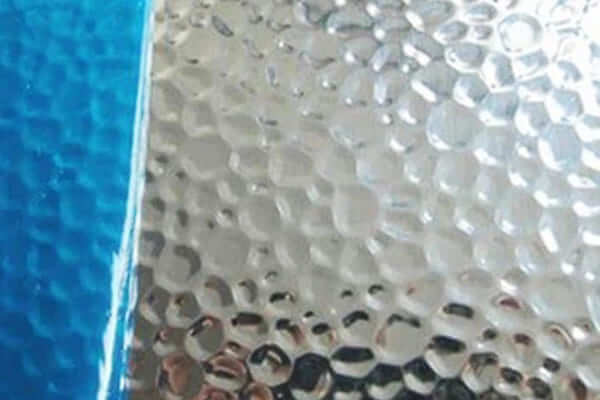 Pebble Embossed Aluminum Sheets
Understanding Pebble Embossed Aluminum Sheets
What Are Pebble Embossed Aluminum Sheets?
Pebble embossed aluminum sheets feature a sophisticated surface treatment that creates a three-dimensional texture resembling smooth river pebbles.
Manufacturers achieve this distinctive finish through precision embossing processes that press specialized dies onto the aluminum surface under controlled pressure and temperature conditions.
The process transforms flat aluminum sheets into dimensionally rich surfaces that capture and reflect light in captivating ways.
These sheets typically range from 0.5mm to 3mm in thickness, accommodating diverse application requirements.
The embossing depth usually measures between 0.3mm and 0.8mm, providing sufficient tactile interest without compromising structural integrity or creating maintenance challenges.
Aluminum serves as the ideal substrate because of its natural malleability, excellent formability, and inherent corrosion resistance—properties that make the embossing process efficient while maintaining material performance.
The pebble pattern itself offers remarkable versatility.
Designers appreciate the texture because it effectively conceals fingerprints, dust, and minor surface imperfections that would appear obvious on smooth finishes.
This practical benefit combines with aesthetic appeal, making pebble embossed aluminum sheets exceptionally popular for high-traffic commercial environments.
Technical Composition and Properties
| Property |
Specification |
Benefits |
| Base Material |
Aluminum Alloy (1100, 3003, 5052) |
Excellent workability and corrosion resistance |
| Thickness Range |
0.5mm – 3mm |
Versatility across applications |
| Embossing Depth |
0.3mm – 0.8mm |
Visual impact without structural compromise |
| Surface Finish |
Anodized or Coated |
Enhanced durability and aesthetic options |
| Weight |
Approximately 2.7 kg/m² (1mm thickness) |
Lightweight for easy installation |
| Tensile Strength |
40-50 MPa |
Adequate for most architectural applications |
| Corrosion Resistance |
Excellent (5000+ hours salt spray) |
Suitable for coastal and demanding environments |
| Thermal Conductivity |
237 W/m·K |
Efficient heat transfer properties |
| Recyclability |
100% |
Environmentally responsible choice |
Aluminum’s atomic structure enables the embossing process without cracking or weakening.
The metal’s crystalline arrangement allows material redistribution rather than removal, meaning manufacturers don’t compromise structural integrity when creating the pebble texture.
This distinction proves crucial when comparing pebble embossed aluminum sheets to embossed materials using subtractive manufacturing methods.
The alloy selection significantly impacts performance characteristics.
Huawei Aluminum employs premium aluminum alloys, particularly 3003 and 5052 varieties, which balance formability with strength.
These alloys demonstrate superior corrosion resistance compared to pure aluminum, extending product lifespan in challenging environments while maintaining the pristine appearance that architects and designers demand.
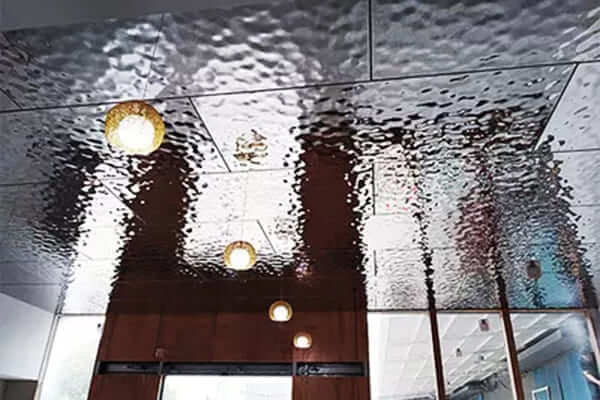 Application of Pebble Embossed Aluminum Sheets
The Aesthetic Appeal and Design Versatility
Visual Characteristics That Transform Spaces
Pebble embossed aluminum sheets create sophisticated visual depth that flat-surfaced materials cannot achieve.
The three-dimensional texture catches light from multiple angles, generating dynamic visual effects that change throughout the day as lighting conditions shift.
Morning sunlight reveals crisp, defined shadow lines within each pebble impression, while afternoon or evening illumination softens these features, creating entirely different atmospheric effects.
This dynamic quality proves invaluable for designers seeking to add visual interest without introducing busy patterns or competing colors.
The neutral character of the pebble texture complements virtually any color palette or design scheme.
Designers frequently specify these sheets in:
- Neutral tones (silver, champagne, bronze) for contemporary and minimalist aesthetics
- Warm finishes (bronze, copper) for traditional and transitional designs
- Bold colors (black, deep charcoal) for dramatic, modern applications
- Metallic variations for luxury and high-end commercial projects
Design Applications Across Industries
Hospitality and Commercial Spaces
Hotels and upscale restaurants utilize pebble embossed aluminum sheets for elevator interiors, wall cladding, and custom millwork.
The texture elevates perceived quality and luxury while delivering practical durability.
Five-star properties particularly favor these sheets because they withstand intense daily use while maintaining sophisticated aesthetics.
The material resists vandalism more effectively than smooth finishes—graffiti removal proves simpler on textured surfaces, and minor scratches blend seamlessly with the pebble pattern.
Retail Environments
High-end retail establishments specify pebble embossed aluminum for feature walls, product display backdrops, and architectural accents.
The material’s ability to reflect branding values through subtle sophistication aligns perfectly with luxury brand positioning.
Retailers report that customers perceive products displayed against pebble-textured backgrounds as higher quality, supporting premium pricing strategies.
Residential Applications
Luxury residential projects increasingly incorporate these sheets for accent walls, kitchen backsplashes (behind protective glass), and architectural millwork.
Designers appreciate the material’s versatility in complementing various interior styles, from minimalist Scandinavian aesthetics to ornate contemporary designs.
Automotive and Transportation
The automotive industry employs pebble embossed aluminum for interior trim, headliners, and decorative panels.
The texture masks vibrations and minor irregularities while providing superior aesthetics compared to plastic alternatives.
Premium vehicle manufacturers utilize these sheets to differentiate luxury models from standard offerings.
Aerospace and Defense
Specialized applications in aerospace industries benefit from aluminum’s lightweight properties combined with the structural integrity maintained through proper embossing techniques.
The pebble texture provides secondary benefits including reduced light reflection in certain applications and improved grip characteristics for interior components.
Superior Durability and Longevity
Corrosion Resistance and Environmental Performance
Aluminum’s natural oxide layer provides inherent corrosion resistance, but pebble embossed sheets benefit from additional protective treatments.
Manufacturers commonly apply anodizing processes that create dense aluminum oxide coatings 25-150 micrometers thick.
This treatment dramatically extends lifespan, particularly in challenging environments.
Corrosion Performance Data:
Accelerated salt-spray testing (ASTM B117) demonstrates performance capabilities:
– Uncoated aluminum: 500-1,000 hours before visible corrosion
– Anodized aluminum (Type II): 2,000-5,000 hours
– Anodized aluminum (Type III) with sealant: 5,000+ hours
– Huawei Aluminum premium specifications: 8,000+ hours
These extended performance windows translate to decades of maintenance-free service in most environments.
Coastal installations, where salt spray poses significant corrosion risks, routinely achieve 15-20 year lifespans with minimal maintenance when utilizing premium anodized specifications.
Scratch and Abrasion Resistance
The pebble texture provides inherent protection against visible damage.
While smooth finishes show every fingerprint and minor scratch, the embossed surface naturally camouflages imperfections.
This practical advantage reduces maintenance requirements and preserves aesthetic appeal over extended periods.
Anodized coatings further enhance scratch resistance, with Type III hard anodizing providing hardness comparable to ceramic materials.
Testing demonstrates that properly specified pebble embossed sheets withstand 10,000+ cycles of abrasion testing before showing noticeable wear, vastly exceeding typical maintenance standards.
Maintenance Requirements
Pebble embossed aluminum sheets demand minimal maintenance compared to alternative materials:
- Dust and debris removal: Gentle dry brushing or low-pressure air removes accumulated particles
- Light cleaning: Mild soap solution with soft-bristle brushing removes fingerprints and light soiling
- Deeper cleaning: Non-abrasive commercial aluminum cleaners address stubborn stains without affecting finish integrity
- Protective treatments: Periodic application of clear protective coatings extends performance in harsh environments
This straightforward maintenance regime makes pebble embossed sheets particularly attractive for facilities management professionals seeking materials that balance aesthetic sophistication with practical maintainability.
Technical Specifications and Performance Standards
Dimensional Accuracy and Quality Control
Huawei Aluminum implements rigorous quality control protocols ensuring dimensional consistency and embossing precision.
Advanced measurement systems verify specifications at multiple production stages, maintaining tolerances within ±0.05mm for thickness and ±2% for embossing depth uniformity.
| Quality Parameter |
Standard |
Huawei Aluminum Specification |
| Thickness Tolerance |
±10% |
±3% |
| Flatness |
±5mm per meter |
±2mm per meter |
| Embossing Uniformity |
±15% depth variation |
±5% depth variation |
| Surface Defects |
Acceptable per ASTM |
Near-zero defects |
| Color Matching |
±5 Delta E |
±2 Delta E |
This commitment to precision ensures seamless installation and uniform appearance across large installations.
Architects and installers consistently report that Huawei Aluminum sheets demonstrate superior dimensional consistency compared to competing products, reducing installation challenges and material waste.
Thermal and Electrical Properties
Aluminum’s exceptional thermal conductivity (237 W/m·K at room temperature) provides significant advantages in applications requiring heat dissipation.
Data centers, for example, increasingly utilize pebble embossed aluminum sheets for decorative thermal management components, achieving dual functionality—aesthetic appeal combined with practical heat transfer.
The material’s electrical conductivity (approximately 35-40 MS/m) makes it suitable for applications requiring electromagnetic shielding or grounding.
These properties expand application possibilities beyond purely decorative functions, allowing designers and engineers to integrate aesthetic elements with functional performance requirements.
Fire Safety and Building Codes
Aluminum demonstrates exceptional fire performance characteristics:
- Melting point: 933°F (501°C)—well above typical fire temperatures
- Combustibility: Non-combustible (ASTM E136 classification)
- Smoke development: Minimal compared to organic materials
- Flame spread: Typically 0-15 (ASTM E84)
These properties ensure pebble embossed aluminum sheets meet or exceed building codes in virtually all jurisdictions.
Architects particularly value this compliance advantage because it eliminates material specification barriers that often complicate material selection processes.
Comparing Pebble Embossed Aluminum to Alternative Materials
Competitive Material Comparison
| Aspect |
Pebble Embossed Aluminum |
Embossed Steel |
Composite Materials |
Painted Drywall |
| Aesthetic Appeal |
Excellent |
Good |
Very Good |
Good |
| Durability (Years) |
20-30+ |
10-15 |
5-10 |
3-5 |
| Maintenance |
Minimal |
Moderate |
Moderate to High |
High |
| Installation Cost |
Moderate |
Moderate |
Low to Moderate |
Low |
| Weight (per m²) |
2.7kg (1mm) |
7.8kg (1mm) |
Variable 3-5kg |
15-20kg |
| Fire Rating |
Excellent |
Good |
Variable |
Fair to Good |
| Recyclability |
100% |
75% |
0-20% |
Poor |
| Climate Adaptability |
Excellent |
Good |
Fair |
Poor |
| Initial Investment |
Moderate |
Moderate |
Low |
Very Low |
| Long-term Value |
Excellent |
Good |
Fair |
Poor |
This comparison reveals pebble embossed aluminum’s superior value proposition across multiple dimensions.
While initial costs exceed some alternatives, the extended lifespan, minimal maintenance requirements, and superior aesthetics create compelling long-term value, particularly for commercial applications where lifecycle costs determine material selection.
Why Pebble Embossed Aluminum Outperforms Alternatives
Weight Advantage Over Steel
Embossed steel sheets weigh approximately 2.8 times more than equivalent aluminum sheets (7.8kg/m² versus 2.7kg/m² at 1mm thickness).
This weight difference dramatically impacts installation requirements—lighter materials demand less structural support, reduce labor costs, and simplify logistics.
For high-rise applications or renovation projects with existing structural limitations, aluminum provides decisive advantages that steel cannot match.
Durability Superior to Composites
Composite materials, while offering attractive initial costs, demonstrate significantly shorter service lives.
Environmental exposure—UV radiation, temperature cycling, moisture infiltration—degrades composite integrity over time.
Aluminum’s crystalline structure proves immune to such degradation, maintaining structural properties indefinitely when properly maintained.
Aesthetic Consistency vs Painted Surfaces
Paint finishes on drywall or alternative substrates fade, chip, and show wear patterns that diminish aesthetic appeal.
Pebble embossed aluminum maintains consistent appearance because the texture is integral to the material, not applied to the surface.
This permanence justifies premium pricing in applications where appearance consistency directly impacts brand perception and customer experience.
Manufacturing Excellence: Huawei Aluminum’s Approach
Production Technology and Innovation
Huawei Aluminum operates state-of-the-art manufacturing facilities employing advanced embossing technology that combines precision engineering with automated quality control systems.
The company invests continuously in research and development, maintaining technological leadership in pebble embossed aluminum production.
Manufacturing Process Overview:
- Raw material selection: Premium aluminum alloys undergo rigorous testing
- Surface preparation: Advanced cleaning removes contaminants that could compromise embossing quality
- Precision embossing: Specialized presses apply controlled pressure using precisely engineered dies
- Quality inspection: Automated systems verify dimensional accuracy and surface uniformity
- Finishing treatments: Anodizing or coating processes enhance durability and appearance
- Final verification: Comprehensive testing confirms specifications before shipment
This systematic approach ensures that every sheet meets exacting standards, delivering consistent quality that architects, designers, and contractors depend upon.
Environmental Commitment and Sustainability
Huawei Aluminum demonstrates genuine commitment to environmental stewardship throughout manufacturing operations:
- Energy efficiency: Modern facilities consume 25-30% less energy than industry averages
- Waste reduction: Advanced processes minimize scrap material, with 95%+ recovery rates
- Water conservation: Closed-loop cooling systems reduce water consumption by 60% compared to conventional operations
- Emissions management: Advanced filtration systems maintain air quality standards
- Recycling programs: 100% of aluminum scrap returns to the production cycle
This environmental focus aligns manufacturing operations with global sustainability objectives while delivering superior products.
Customers increasingly specify materials from environmentally responsible manufacturers, making Huawei Aluminum’s sustainability commitment a significant competitive advantage.
Quality Certifications and Standards
Huawei Aluminum maintains comprehensive quality certifications demonstrating adherence to international standards:
- ISO 9001:2015: Quality management systems
- ISO 14001:2015: Environmental management systems
- ASTM standards: Compliance with American Society for Testing and Materials specifications
- GB standards: Adherence to Chinese national standards
- CE marking: European conformity for applicable products
These certifications provide assurance to customers that materials meet rigorous performance and quality standards established by international authorities.
Installation, Customization, and Project Integration
Installation Considerations and Best Practices
Successful pebble embossed aluminum sheet installation requires understanding material properties and installation methodology:
Structural Support Requirements:
- Verify structural capacity accommodates material weight
- Design support systems accounting for thermal expansion (aluminum expands approximately 0.000023 per °C)
- Implement proper drainage to prevent moisture accumulation behind sheets
- Ensure ventilation behind installed sheets in exterior applications
Installation Techniques:
Professionals typically employ one of three installation methods:
- Adhesive Application: High-performance epoxy or polyurethane adhesives bond sheets to substrates. This method provides clean aesthetics without visible fasteners.
- Mechanical Fastening: Stainless steel fasteners or specialized aluminum clips secure sheets to substrate. This approach facilitates future removal and allows for thermal movement.
- Integrated Framing Systems: Custom aluminum framing systems integrate sheets into architectural systems, providing flexibility and professional appearance.
Surface Preparation:
Substrate preparation critically influences installation success:
– Ensure substrate surfaces are clean, dry, and free of dust or contaminants
– Address any structural movement or settling before installation
– Verify substrate flatness within specified tolerances
– Apply appropriate primers or bonding agents based on substrate material
Customization and Design Options
Huawei Aluminum offers extensive customization capabilities enabling designers to realize unique creative visions:
Thickness Options:
– Thin sheets (0.5-1mm): Lightweight applications
Share with PDF: Download