Unleashing Durability and Versatility: The Power of 4×8 Aluminum Sheets in Modern Construction
Introduction
In the rapidly evolving landscape of modern construction, the quest for materials that combine strength, flexibility, and efficiency remains relentless. Among the myriad options, aluminum sheets have garnered significant attention due to their superior properties, ease of fabrication, and adaptability across diverse applications. Particularly, 4×8 aluminum sheets—measuring 4 feet by 8 feet—have become a staple in construction projects worldwide.
This comprehensive guide delves into the multifaceted advantages of 4×8 aluminum sheets, exploring alloys like 3003, 3004, 5052, and 6061, with thicknesses ranging from 1mm to 20mm.
We will analyze their mechanical characteristics, practical applications, and how they elevate modern construction endeavors.
 4×8 Aluminum Sheets For Construction
Additionally, we will spotlight Huawei Aluminum, a leading global supplier known for quality and innovation in aluminum products.
Whether you’re an architect, engineer, contractor, or DIY enthusiast, understanding the power of 4×8 aluminum sheets will empower you to make informed decisions, optimize project outcomes, and unlock new possibilities.
The Significance of 4×8 Aluminum Sheets in Modern Construction
Why Size Matters: The Advantages of 4×8 Sheets
The 4×8 foot dimension has become an industry standard due to several practical benefits:
- Ease of Handling and Transportation: The size is manageable for lifting, cutting, and installation, reducing labor costs and time.
- Versatility in Applications: The standard sheet size fits numerous building requirements without excessive waste.
- Availability and Cost-Effectiveness: Widely produced, ensuring consistent supply and competitive pricing.
The Role of Aluminum in Construction
Aluminum’s lightweight, corrosion resistance, and high strength-to-weight ratio make it ideal for:
- Architectural panels
- Cladding and facades
- Roofing and siding
- Structural frameworks
- Interior decorative elements
- Signage and display structures
Rising Demand for Aluminum Sheets
Global construction spending has increasingly incorporated aluminum due to its eco-friendly profile—being recyclable infinitely—and performance benefits.
The versatility of 4×8 aluminum sheets aligns with the industry’s push toward sustainable, durable, and adaptable building solutions.
In-Depth Overview of Aluminum Alloys Suitable for 4×8 Sheets
The choice of alloy profoundly affects the performance attributes of aluminum sheets across various construction applications.
Below we explore the prominent alloys—3003, 3004, 5052, and 6061—in terms of composition, mechanical properties, and use cases.
Alloy 3003: The General-Purpose Workhorse
Composition and Characteristics
- Composition: Manganese-based alloy (~1.2%), with small amounts of other elements.
- Strength: Moderate; approximately 20% stronger than pure aluminum.
- Corrosion Resistance: Excellent.
- Workability: Excellent; easy to form and weld.
- Typical Thickness: 1mm to 10mm.
Applications
- Roofing panels
- Siding
- Decorative trims
- Storage tanks
Alloy 3004: Enhanced Strength with Good Formability
Composition and Characteristics
- Composition: Manganese (~1.2-1.5%), similar to 3003 but with slight modifications.
- Strength: Slightly higher than 3003.
- Corrosion Resistance: Excellent.
- Formability: Good.
- Common Thickness: 1mm to 20mm.
Applications
- HVAC ducting
- Commercial siding
- Storage tanks
- Cooking utensils
Alloy 5052: The Marine-Grade Contender
Composition and Characteristics
- Composition: Magnesium (~2.2%) and chromium.
- Strength: Higher than 3003 and 3004.
- Corrosion Resistance: Superior, especially in marine environments.
- Workability: Good, though more challenging than 3003/3004.
- Thickness Range: 1mm to 20mm.
Applications
- Marine vessels
- Fuel tanks
- Pressure vessels
- Architectural applications requiring corrosion resistance
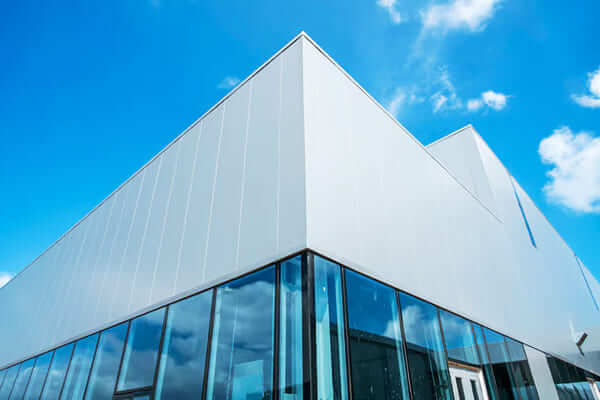 Building facade aluminum plate
Alloy 6061: The Versatile Structural Alloy
Composition and Characteristics
- Composition: Silicon and magnesium.
- Strength: Significantly higher; suitable for structural applications.
- Corrosion Resistance: Good, with proper anodizing.
- Weldability: Excellent.
- Formability: Good.
- Thickness Range: 1mm to 20mm.
Applications
- Structural components
- Bridges
- Aircraft parts
- Heavy-duty trailers
Technical Specifications of 4×8 Aluminum Sheets
| Feature |
Description |
| Size |
4 feet x 8 feet (1219mm x 2438mm) |
| Thickness |
1mm to 20mm |
| Available Alloys |
3003, 3004, 5052, 6061 |
| Surface Finishes |
Mill finish, anodized, painted, brushed |
| Standard Tolerances |
+/- 0.2mm (depending on thickness) |
Mechanical Properties Table
| Alloy |
Tensile Strength (MPa) |
Yield Strength (MPa) |
Hardness (HB) |
Corrosion Resistance |
| 3003 |
130-170 |
70-100 |
45-55 |
Excellent |
| 3004 |
150-210 |
100-130 |
55-65 |
Excellent |
| 5052 |
210-260 |
130-170 |
70-90 |
Superior |
| 6061 |
240-310 |
145-240 |
95-120 |
Good |
Practical Applications and Case Studies
Architectural Facades and Cladding
The aesthetic appeal of aluminum sheets lies in their finish options and lightweight nature. For example:
- Example: A commercial building in Dubai utilized 4×8 5052 aluminum panels for its exterior cladding, achieving a weather-resistant façade with high durability against salty air.
Structural Frameworks and Support Structures
- Example: A pedestrian bridge in Europe employed 6061 aluminum sheets for its structural decking, providing strength without excessive weight, facilitating easier installation.
Roofing and Siding
- Advantages: Aluminum sheets provide long-lasting, low-maintenance roofing solutions, resistant to rust and corrosion, reducing lifecycle costs significantly.
- Case Study: A sports stadium’s roofing in Australia deployed 3003 aluminum sheets, ensuring high durability under intense weather conditions.
Signage, Displays, and Interior Design
- Aluminum sheets serve as perfect substrates for digital displays and decorative purposes. Their smooth surface and paintability support high-resolution graphics and custom finishes.
Manufacturing and Fabrication Benefits
Ease of Cutting and Shaping
- Aluminum sheets can be easily cut with common tools like saws, shears, and CNC machines.
- Precise contouring and drilling are straightforward, reducing fabrication time.
Welding and Joining
- Alloys 6061 and 3004 offer excellent weldability, essential for structural applications.
- Compatible with various joining techniques like TIG, MIG, and adhesive bonding.
Finishing and Surface Treatments
- Aluminum sheets accommodate a variety of finishes including anodizing, painting, and polishing, enhancing both appearance and corrosion resistance.
Comparing Aluminum Sheets with Other Materials
| Criteria |
Aluminum Sheets |
Steel Sheets |
Plastic Panels |
| Weight |
Light (~2.7 g/cm³) |
Heavy |
Very light |
| Corrosion Resistance |
High (especially alloy 5052) |
Moderate (requiring coatings) |
Low |
| Strength |
Good to excellent |
Very high |
Moderate |
| Ease of Fabrication |
Very good |
Moderate to difficult |
Very easy |
| Cost |
Moderate to high (depending on alloy) |
Usually lower initial cost |
Usually lower initial cost |
| Sustainability |
Recyclable, eco-friendly |
Recyclable |
Recyclable |
Insight: Aluminum’s combination of lightness and corrosion resistance offers advantages over steel, especially in applications where weight reduction and longevity matter.
FAQs About 4×8 Aluminum Sheets
What factors influence the choice of alloy for a construction project?
Answer: The selection depends on:
- Mechanical strength requirements
- Environmental exposure (e.g., marine, industrial)
- Fabrication and welding needs
- Aesthetic considerations
- Cost constraints
Can 4×8 aluminum sheets be customized?
Answer: Yes. They can be cut, drilled, bent, and finished to meet project-specific specifications. Customization services are available from suppliers like Huawei Aluminum.
What is the typical lifespan of aluminum sheets in construction?
Answer: With proper maintenance, aluminum sheets—especially alloys like 5052—can last 30 years or more, resisting corrosion and structural fatigue.
How do weather conditions affect aluminum sheets?
Answer: Aluminum exhibits excellent weather resistance; however, in highly saline environments, alloys like 5052 perform better. Protective coatings and surface treatments further enhance longevity.
Are there eco-friendly options for aluminum sheet manufacturing?
Answer: Absolutely. Aluminum is 100% recyclable, and many suppliers, including Huawei Aluminum, prioritize sustainable production practices.
About Huawei Aluminum: A Trusted Supplier
Huawei Aluminum has established itself as a global leader in aluminum product manufacturing and supply.
With decades of experience, Huawei specializes in high-quality aluminum sheets across alloys like 3003, 3004, 5052, and 6061, catering to varied needs in construction, aerospace, transportation, and consumer goods.
Key Strengths of Huawei Aluminum:
- Quality Assurance: Rigorous testing and certification to meet international standards.
- Advanced Production: State-of-the-art manufacturing facilities ensuring precise dimensions and finishes.
- Customer-Centric Approach: Customized solutions, timely delivery, and technical support.
- Sustainable Practices: Commitment to eco-friendly manufacturing and recycling initiatives.
Why Choose Huawei Aluminum?
- Extensive product range covering various alloys and thicknesses.
- Proven track record with global clients.
- Competitive pricing and reliable supply chain.
Conclusion
The adoption of 4×8 aluminum sheets has revolutionized modern construction by combining durability, versatility, and efficiency.
Alloy selection—ranging from 3003 for general use, 3004 for enhanced strength, 5052 for marine-grade durability, to 6061 for structural applications—provides architects and engineers with tailored options to meet project demands.
Their adaptability in applications spanning facade cladding, roofing, structural frameworks, and interior finishes demonstrates unparalleled flexibility.
Supported by supplier expertise, such as Huawei Aluminum, project stakeholders can leverage high-quality, customizable, and sustainable aluminum solutions.
In an industry driven by innovation and sustainability, 4×8 aluminum sheets stand out as a reliable choice, ensuring structures that are not only robust and functional but also aesthetically appealing and environmentally responsible.
Share with PDF: Download